
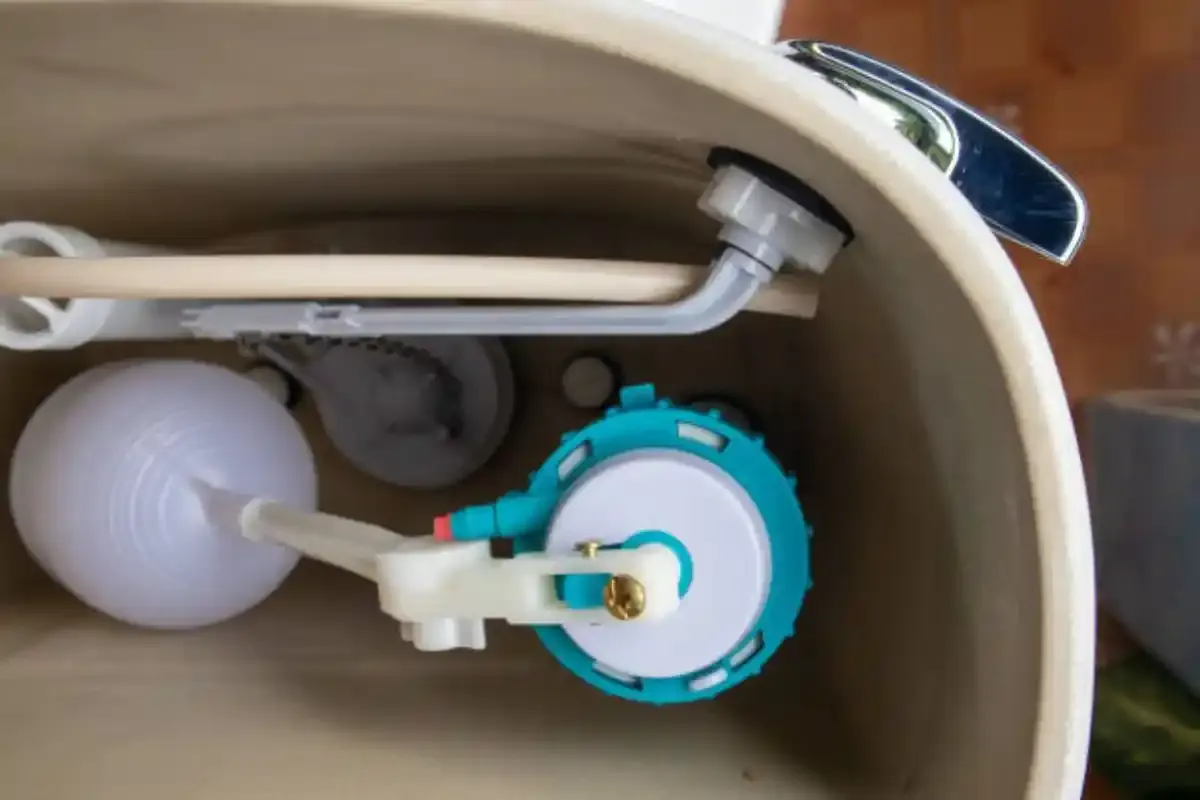
Signs the lever needs replacing
- The handle is loose, wobbles or falls off.
- You have to hold the handle down to complete a flush.
- The handle sticks down or does not spring back.
- The metal is corroded, cracked or the finish is flaking.
- The chain no longer lifts the flapper far enough.
Before you buy a handle, check that the lever is really the problem. If the lever moves freely but the flush is weak, the cause may be a worn flapper, a low water level or a clogged rim. A handle only fixes problems at the handle.
Matching the right handle
| Mount type | How to recognize it | What to buy |
|---|---|---|
| Front mount | Handle on the front of the tank, facing you | Front-mount handle |
| Side mount | Handle on the left or right side of the tank | Side-mount handle |
| Angle mount | Handle at a corner of the tank | Angle-mount handle |
| Push button | Buttons on the tank lid | Match to the brand, a different repair |
Take the old handle with you or photograph the inside. Most handles fit a standard hole, but the length of the arm and the direction of the nut matter. The mounting nut is usually reverse-threaded, so it loosens clockwise. That surprises many people.
Steps to replace it
- Close the supply valve behind the toilet by turning it clockwise, then flush to empty the tank.
- Remove the tank lid and set it on a towel.
- Unhook the chain or clip from the old lever arm.
- Unscrew the mounting nut inside the tank. Remember it may be reverse-threaded.
- Pull the old handle out through the front or side.
- Slide the new handle through the hole, thread on the nut by hand and snug it with a wrench. Do not overtighten porcelain.
- Attach the chain to the new arm with a little slack, about half an inch, so the flapper can close completely.
- Turn the supply valve on, let the tank fill, flush and watch the flapper lift and seat.
If the chain is too tight, the flapper never seals and the toilet runs. If it is too loose, the flush is weak. Adjust by moving the clip a link at a time. Cut off any extra chain so it cannot tangle under the flapper.
Port Hueneme note: California toilet rules
California law requires high-efficiency toilets that use 1.28 gallons per flush or less. That rule, from Assembly Bill 715, has been in effect since January 1, 2014. Senate Bill 407 defines a noncompliant toilet as one that uses more than 1.6 gallons per flush in buildings built on or before January 1, 1994, set a January 1, 2017 deadline for single-family homes, and requires sellers to disclose noncompliant fixtures.
Replacing the handle does not change this, but if your toilet is old enough to be noncompliant, the whole toilet is the thing to replace.
The City of Port Hueneme reports tap water at about 210 milligrams per liter of hardness, which is roughly 12 grains per gallon by our conversion. Hard water leaves scale on tank parts, and corroded handles and stuck flappers are common results. Rinse the tank parts when you open the tank.
New handle, same problem?
Call and describe what the toilet does. We repair or replace the flapper, fill valve or the whole toilet.
When the handle is not the whole story
Many toilets with a failing handle also have a tired flapper and fill valve, because they are the same age. Replacing the flapper at the same time is cheap and avoids a second job. If the toilet rocks, leaks at the base or clogs repeatedly, those are different faults, and our toilet repair page explains them.
A handle that moves freely but a toilet that will not flush well can also point to a drain problem. If the tub or sink next to the toilet is slow, the blockage may be further down the line, and drain cleaning is the right service.
Tools and time
You need an adjustable wrench, a towel and possibly pliers. The job takes about fifteen minutes. If the tank bolts or the supply line are corroded, stop and call. Forcing a rusted fitting can crack porcelain and turn a small job into a flood.
Common lever mistakes
Check which side of the tank the handle sits on. Levers come in front, side and angled mounts, and buying the wrong one is the most common reason a quick repair turns into a second trip to the store.
The mounting nut has a reverse thread on most toilets. Turn it clockwise to loosen it, and hand tighten the new one, because porcelain cracks under a wrench.
If the new lever works but the toilet keeps running, the chain is probably too tight or too loose. About half an inch of slack lets the flapper seal fully.
We repair toilets in Port Hueneme, Oxnard and Channel Islands Beach. Landlords and property managers can ask for a written description of the work.
Questions Port Hueneme homeowners ask
The nut inside the tank is usually reverse-threaded, so it loosens clockwise and tightens counterclockwise. Check the nut before you force it.
Snug by hand plus a gentle turn with a wrench. Porcelain cracks if you overtighten.
Yes. State law requires high-efficiency toilets that use 1.28 gallons per flush or less, and older buildings must replace noncompliant fixtures under SB 407.
The chain is probably too tight and holding the flapper up. Add a little slack so it can seal.