
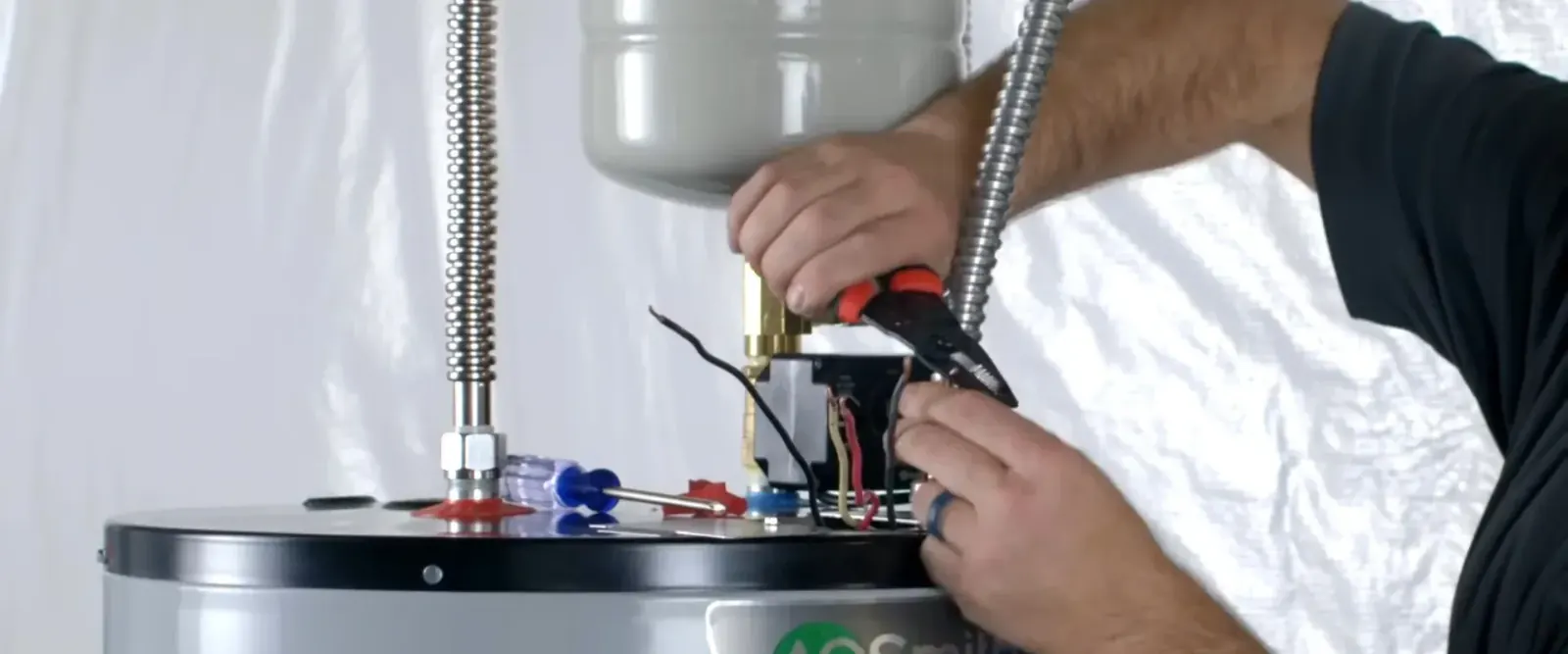
Water heater installation is the planned version of the job: a new home, a remodel, a move from a closet to a garage, or an upgrade you have been putting off. The goal is a unit that matches how many people use hot water and fits the space and fuel you have.
Unlike a failed-tank swap, you can compare options before you commit. We explain each one in plain terms and put the price in front of you before work begins.
Sizing the heater to the household
A tank heater is sized by how much hot water you use in the busiest hour, not by the number of bathrooms. A couple that showers at different times can do fine on 40 gallons. A family that runs two showers and the dishwasher at once may want 50 or more. We ask how you use hot water and match the unit to that pattern.
| Household | Common tank size | Notes |
|---|---|---|
| One or two people | 30 to 40 gallons | Fine with staggered showers |
| Three to four people | 40 to 50 gallons | Most common size we install |
| Five or more, or soaking tub | 50 to 75 gallons | Check space and venting before ordering |
| Small unit or condo closet | Short and wide models | Often electric, access matters |
Gas, electric, hybrid or tankless
Fuel decides most of the install. A gas heater needs a gas line, a vent through the roof and combustion air. An electric heater needs a dedicated circuit. A hybrid heat pump heater needs a condensate drain and room to breathe. A tankless unit needs a larger gas line than most tanks and a vent rated for it.
If your home already has gas piping, a tank or tankless gas unit is usually the lowest-friction path. If you are building out a new room or a detached space with no gas, electric or hybrid avoids running a new gas line. We help you weigh that trade-off before you buy.
What a proper installation includes
- A relief valve with a discharge pipe routed to a safe termination, not capped or plugged.
- Earthquake strapping on the tank, as California Health and Safety Code section 19211 requires.
- Dielectric or flexible connectors so dissimilar metals do not corrode the fittings.
- A thermal expansion tank where the home has a closed system or a pressure regulator.
- A drain pan and drain line where a leak would reach finished floors, as in a closet or upstairs unit.
- Gas shutoff, a sediment trap and a leak test on every gas connection.
What affects the price of installing a water heater
Install cost depends on the unit and on how much of the surrounding plumbing has to change. These are the real drivers.
The unit itself
Tank, hybrid and tankless models span a wide price range before any labor.
Gas line and venting work
A new gas run, a larger line for tankless, or a new vent through the roof adds labor and materials.
Electrical work
A new 240 volt circuit or panel space for an electric or hybrid heater is a separate cost.
Relocating the heater
Moving water, gas and vent lines to a new spot takes more time than replacing in place.
Permit and inspection
Permit rules vary, so ask the city building department. The 2025 city fee schedule lists a water heater and vent permit fee.
Insurance does not pay for a planned upgrade. If you are installing because an old unit failed and damaged the home, the damage claim and the new heater are handled separately.
You get a clear price before work starts. Call (805) 249-7135 and describe the space, the fuel and the household, and we scope the install over the phone.
Permits, code and the city
The California Plumbing Code that governs this work is published by IAPMO as part of Title 24, and the 2025 cycle took effect January 1, 2026. We install to the code in force. The City of Port Hueneme Building and Safety Division at 250 N Ventura Road issues permits through its online system, and a city business license is required for contractors working in the city.
Permit rules vary by job type, so call Building and Safety at 805-986-6512 to confirm what yours needs. We will describe the install in the terms the building department asks about, which makes that call quick.
Planning around hard water
The city reported 210 parts per million total hardness in its 2025 water quality report, about 12 grains per gallon by our conversion. If you are installing a tankless unit, plan on regular descaling. For tank units, a drain valve you can reach makes yearly flushing easy. Read about water treatment options if the scale is a concern at taps and fixtures too.
Planning an install?
Call with the household size, the space and the fuel you have. We scope it and send a price before scheduling.
When the old heater has already failed
If you are reading this because the current heater is leaking or dead, the faster route is our water heater replacement service, which treats it as the urgent job it is. We also install in Oxnard and Channel Islands Beach, and the process above applies in both.
Questions about Water Heater Installation in Port Hueneme
A like-for-like tank install in an accessible spot usually takes a few hours. New gas runs, venting, relocation or a tankless conversion can take a full day or more, and may need a permit and inspection.
Permit rules vary, so ask the city Building and Safety Division at 805-986-6512. The 2025 city fee schedule lists a fee for a water heater and vent permit, and we can describe the job in the terms the building department needs.
Yes. Closet installs need correct venting or combustion air for gas units, a drain pan, and attention to the route water would take if the tank leaked. We check those before we begin.
If gas is already piped to the spot, a gas heater is usually the easier install. Where there is no gas, electric or hybrid avoids new gas piping. We compare the install work and running considerations for your home.
Yes. State law requires new and replacement water heaters to be braced, anchored or strapped, and strapping is part of every install we do.