
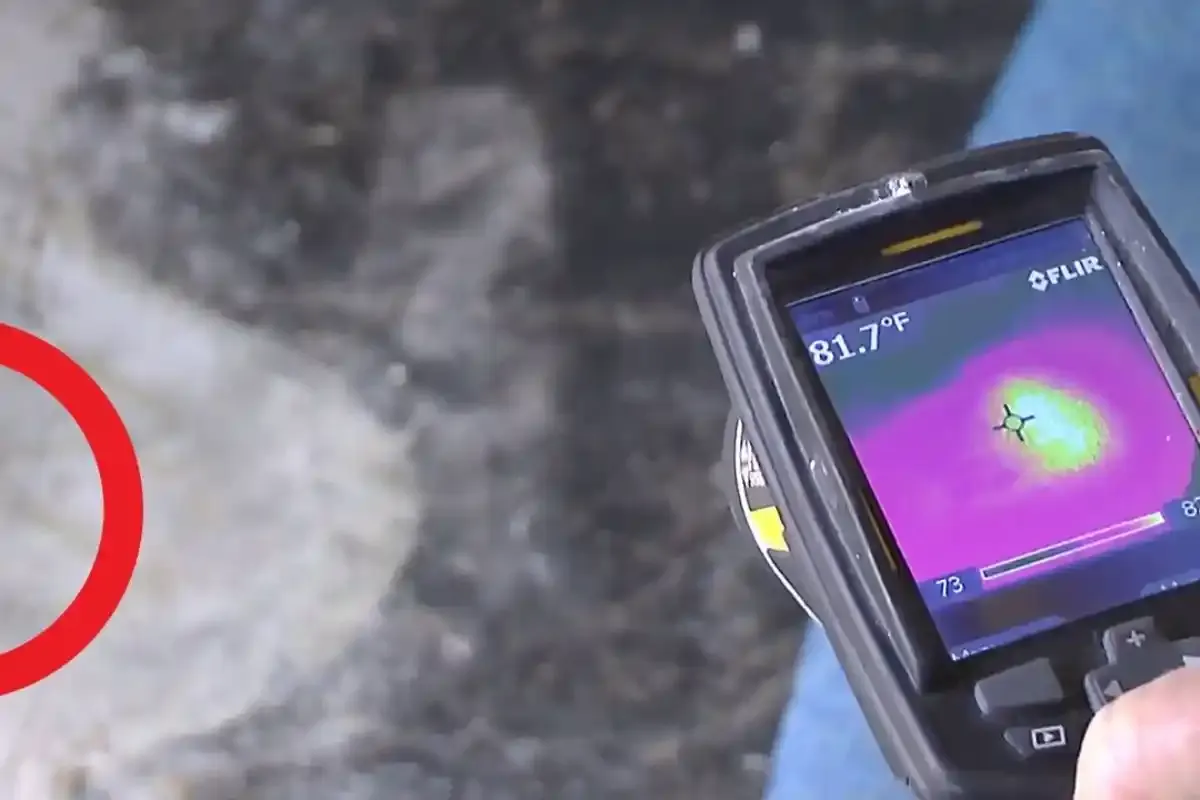
A slab leak is a break in a water line that runs in or under the concrete floor. It keeps running because the water has nowhere to go but down and sideways, and the first clues are often a bill or a warm patch on the floor. Our line answers 24/7 and we respond to slab leak calls the same day when we can.
If you think the slab is leaking, close the main water valve to stop the loss, keep furniture off wet floors, and call. Do not break the floor yourself, because a wrong guess costs far more than the leak.
Slab leak warning signs: what to check right now
- A warm or hot spot on a tile, wood or concrete floor.
- A faint hiss or hum from the floor with every fixture off.
- A meter that keeps turning after you close all taps.
- Wet carpet or cracked tile with no visible source.
- Unexplained mildew smell at floor level or along baseboards.
- A sudden drop in pressure, mainly on the hot side.
Why a slab leak is a localized, not a citywide, problem
We do not have a published local figure for how many Port Hueneme homes are built on slabs, so we do not claim one. What we do know is that city records show about 65 percent of housing units were built before 1980, and that many Southern California houses from those decades have water lines in or beneath the floor. When a house like that develops a leak, the slab is on the list of places to test.
Water that is warm to the touch on the floor points to a hot-line leak, since the hot pipe heats the concrete above it. Cold-line leaks are harder to feel and show up first as a rising meter reading or a damp patch.
How we locate it
- We isolate the supply and run a pressure test to confirm the loss is real.
- We shut off sections to narrow down hot side, cold side and which branch.
- We listen with acoustic gear and image the floor for heat to mark the leak to within a small area.
- We confirm the finding before anyone opens the floor, then explain the repair choices.
This is the same detection work described on our leak detection page, applied to a floor. The difference is the repair, which has several paths.
| Option | What happens | Best when |
|---|---|---|
| Spot repair | Cut a small hole in the slab, fix the pipe, patch the concrete | One leak in an otherwise sound line |
| Reroute | Abandon the leaking line, run new piping through walls or the attic | Slab access is hard or the line is failing |
| Pipe lining | Coat the inside of the pipe with a resin lining | Pipe is sound enough to be lined, where the method suits |
| Repipe | Replace the failing water lines throughout the house | Several leaks or old galvanized or thin copper |
What affects the price of slab leak repair
Slab work spans a wide range. The method and the finish both matter.
Repair method
A spot repair costs less than a reroute or a full repipe.
Floor covering
Tile, wood and carpet each have different removal and replacement needs.
Depth and location of the leak
A leak in the middle of the house costs more than one near an edge or a wall.
Number of leaks
One failure suggests a repair, many suggest the line is at the end of its life.
Time of day
Emergency dispatch is priced above a scheduled appointment.
Insurance often pays for the water damage and sometimes for access to the leak, but not always for the pipe repair itself. Policies differ, so read yours and call your agent early.
You get a clear price before work starts. Call (805) 249-7135 and describe what you see so we can give you a range.
Hot spot on the floor? Call now.
Close the main and tell us what you noticed. We book the earliest visit and tell you what to check.
Slab leaks and salt, soil and movement
Pipes under a slab sit in soil that holds moisture, and coastal soil can carry salts that attack metal. We do not have a verified local soil report to cite, so we do not state one. What we do see in the field is that old copper and steel lines fail in several places over time, which is why we test the whole system before agreeing a spot repair is enough.
A related symptom is a damp floor from a drain line rather than a supply line. We tell the two apart by testing and by camera, and if it is a drain we send you to sewer line repair or the matching drain service.
Repiping when the slab keeps failing
If a second leak appears within a short time, repeated floor cuts become a poor use of money and a mess. Moving the lines out of the slab and into the walls or attic is a lasting answer. Our repiping page explains that route, including the materials we use and how we keep disruption low. We serve Port Hueneme, Oxnard and Channel Islands Beach.
Questions about Slab Leak Repair in Port Hueneme
Yes. The line is staffed 24 hours a day. If you think water is escaping under the floor, close the main and call (805) 249-7135. We book the next available visit and talk you through what to check while you wait.
Typical signs are a warm spot on the floor, the sound of water with all taps off, a meter that keeps moving, and unexplained damp flooring. A pressure test and acoustic locating confirm it.
A spot repair needs a small hole. A reroute runs new pipe through walls or the attic and avoids cutting the floor in most places. We explain both before you decide.
Locating takes a few hours. A spot repair is usually a day, while a reroute or repipe can take longer. We give you a schedule once we know the method.
Not necessarily. Most slab leaks come from pipe wear, corrosion or fittings. We check for signs of movement while we are there and tell you if something looks like a structural issue.